Category Archives: Uncategorized

Injectional Anthrax

by Rachel Vaughan and Cristina Mastromonaco

It begins…

Anthrax: it’s been plaguing humanity since… well, since the plagues. Bacillus anthracis has been

Figure 1: Scientists are super creative! The word “anthrax” comes from the Greek word anthrakites, meaning “coal-like.” This is a tribute to the characteristic black scab that accompanies disease exposure, seen above. (Source: CDC 1962 ID#2033)

famously described by the Roman poet Virgil, and is suspected to have popped up as

the Plague of Athens and contributed to the fall of Rome. It brought medicine out of the dark ages: the study of anthrax gave definitive proof that contagious diseases can be attributed to a microorganism from a particular source, or reservoir, and was a pioneer in the field of vaccines [6]. 

Figure 1: Scientists are super creative! The word “anthrax” comes from the Greek word anthrakites, meaning “coal-like.” This is a tribute to the characteristic black scab that accompanies disease exposure, seen above. (Source 1: CDC 1962 ID#2033)

Figure 1: Scientists are super creative! The word “anthrax” comes from the Greek word anthrakites, meaning “coal-like.” This is a tribute to the characteristic black scab that accompanies disease exposure, seen above. (Source 1: CDC 1962 ID#2033)

Look at me!

Morg2So just what is anthrax? To go textbook, it’s an aerobic, gram-positive (Fig 2), spore-forming bacteria that is naturally found worldwide in soil, with a preference for growing in warm, wet climates [1, 2]. That means that when conditions Morg3are suboptimal, anthrax can change from an actively replicating, rod shaped bacteria into a dormant endospore form, which can resist drying out, extreme heat, cold temperatures, ultraviolet light and disinfectants [1, 2]. Anthrax is a zoonotic bacteria that mainly affects the hoofed animal, but can be transmitted to humans through contaminated animal products [2].

Figure 2: Gram-positive bacteria look purple under the microscope after they’ve been exposed to a series of dyes called a Gram Stain. A component in their cell wall binds to the violet dye, which in addition to making sure that they’re pretty for the Pathogen Ball, is the first step in helping you to identify these bacteria in a lab. (Source: CDC ID#2226)

Figure 2: Gram-positive bacteria look purple under the microscope after they’ve been exposed to a series of dyes called a Gram Stain. A component in their cell wall binds to the violet dye, which in addition to making sure that they’re pretty for the Pathogen Ball, is the first step in helping you to identify these bacteria in a lab. (Source: CDC ID#2226)

Anthrax attacks

For someone to get infected with anthrax, the bacteria needs a way in. Cutaneous anthrax, ingestion anthrax and Morg4 inhalational anthrax are the three traditional modes of transmission. Your whole body is basically designed to try and fight this kind of thing, but anthrax is a really resourceful attacker. The body’s immune response does its best to protect you from these invaders, but it is no match for the anthrax spore [2].


Morg5Virulence factors allow a microorganism to cause disease, and anthrax has some good ones. It uses a combination of a capsule and potent exotoxins to evade and destroy. The capsule forms a protective shell around the growing bacteria, allowing it to get into host cells and use them like a taxi cab to travel to your lymph nodes, where it can spread through the blood [2].


Figure 3: Anthrax releases its exotoxins (Fig 3.), the lethal factor and the edema factor, into the body. The protective antigen basically acts as a kind of Trojan horse, sitting on the surface of your body’s cells and smuggling them in to where they can do their damage. Edema factor makes the cell swell with water, while the lethal factor (again, scientists with their creative naming tactics) kills the cell by rupturing its membrane through a process called lysis. Similarly to how you don’t do too well when overfull or full of holes, neither do your cells, which is what makes anthrax such a dangerous player [2]. (Image by C. Mastromonaco).

Figure 3: Anthrax releases its exotoxins (Fig 3.), the lethal factor and the edema factor, into the body. The protective antigen basically acts as a kind of Trojan horse, sitting on the surface of your body’s cells and smuggling them in to where they can do their damage. Edema factor makes the cell swell with water, while the lethal factor (again, scientists with their creative naming tactics) kills the cell by rupturing its membrane through a process called lysis. Similarly to how you don’t do too well when overfull or full of holes, neither do your cells, which is what makes anthrax such a dangerous player [2]. (Image by C. Mastromonaco).

Stick it to me

So, all of this seems like old news. Blah blah, thousands of years, blah blah different types, blah blah scary disease. But there’s something currently happening with anthrax spores, and it’s worth taking a look at even if the extent of your interaction with animals can be characterized by the words “they’re delicious.”

Just when we thought that anthrax was a thing of the past – the CDC estimates that only about two cases of naturally-occurring anthrax are documented each year [4] – we were given the gift of something new and wonderful to dread instead of sleeping. In their infinite wisdom, illicit drug users found a way to bring an already vicious bacteria to a whole new level: supplies of heroin contaminated with anthrax made their way into the general population, and subsequently into the arms, legs, butts and groins of some very unlucky addicts.

 

Morg6Bear with us here: we’re going to look at some numbers, compiled in a 2014 issue of Eurosurveillance. Injectional anthrax has exhibited what’s called a bimodal distribution: it first presented itself en masse in December 2009 (having only cropped up previously in a single case in the year 2000), and was followed by a second cluster of cases in June 2012. From 2009-2010, 126 cases of anthrax contracted by heroin users were reported, 95% of which were diagnosed in bonnie Scotland, which unfortunately doesn’t seem to be able to add “pure, unadulterated narcotics” to its list of tourist attractions. Between 2012 and 2013, 15 more cases have emerged in a half a dozen different European countries A 33% mortality rate was reported the first go-around, but the fatality in this more recent wave is much higher, with an estimated 47% of cases resulting in death (Fig. 4).


Figure 4: This beautiful, color coded graph breaks down the timing and geography so that we don’t have to! You can see the two different clusters of disease presentation, and the different countries that were affected [6]. (Source: Eurosurveilance)

Figure 4: This beautiful, color coded graph breaks down the timing and geography so that we don’t have to! You can see the two different clusters of disease presentation, and the different countries that were affected [6]. (Source: Eurosurveilance)

Looking at an overview of the case studies, we can see the differences in disease characteristics. Despite this anthrax presenting similarly to cutaneous initially, the primary symptom – instead of being something easy-to-spot like an eschar – was disproportionate inflammation. This inflammation is pretty special, because not only are pain, fever and redness Morg7 uncommon, it doesn’t seem to elicit any of the standard markers for inflammation, like a higher number of white blood cells or elevated levels of C-reactive protein (CRP). It’s pretty weird – they suspect that it’s tied to  the more immediate action of CaseStudythe edema factor within the tissue, as it doesn’t have to cross the regular barriers [7]. So essentially, injectional anthrax presents most frequently as a kind of deep-tissue cutaneous anthrax with skin infection and blistering, but without any of the helpful markers for the disease that doctors look for. This, along with anthrax’s current state of “how on Earth would you get exposed to THAT?” led to some confusion and misdiagnosis, as the symptoms present similarly to a few other diseases.

The most common cause of death was when the infection went systemic instead of being nicely localized in the injection site. Since the bacteria spread all throughout your body, systemic Morg8 anthrax often results in one of the most terrifying kinds of inflammation: meningitis (Fig. 5). There are three layers called the meninges wrapped around your brain and spinal cord. Large numbers of bacteria between the layers spells bad news for your brain, and in the case of anthrax, meningitis kills about 96% of the time [5]. Once the bacteria has gone systemic, it’s easy to see why it appeals to strongly to those in the heavy metal profession: the presence of large quantities of anthrax bacilli in your blood stream turns your blood so dark that it appears black.

Figure 5: This is your brain on anthrax: this poor soul suffered from hemorrhagic meningitis as a result of inhalation of the spores. Note the blackened outside of the brain, resulting from the anthrax-laden blood. (Source: CDC 1966 ID#1121)

Figure 5: This is your brain on anthrax: this poor soul suffered from hemorrhagic meningitis as a result of inhalation of the spores. Note the blackened outside of the brain, resulting from the anthrax-laden blood. (Source: CDC 1966 ID#1121)


The kicker is that despite the term “injectional anthrax,” at least two patients were likely infected by smoking the drug. That being said, those who smoked only had a much lower risk of developing the disease. That’s actually a pretty interesting development – despite having introduced the spores to their lungs, which would be ripe for colonization, respiratory symptoms were very rare.


Where did it come from, where will it go?

So, since anthrax is so uncommon in the modern world, just how did it worm its way into the European heroin supply? It was believed up until last month that all cases of injectional anthrax came from the same contamination in Morg9 Turkey, but this is unlikely to be the case. Genetically analyzing all available isolated strains (or isolates) of injectional anthrax suggests that there were at least two separate contamination events – one for each outbreak – as there are two different genetic clusters of anthrax bacilli. They’re not related closely enough on the anthrax family tree to have come from the same source, and according to their genetic makeup, they branched off at completely different times. The evidence does suggest that they come from the same country, but this is not necessarily true [9].

Why do you care? Presumably the grand majority of you aren’t exactly the at-risk population. Sure, it’s scary for heroin users, who may be at risk for another spore contamination event, but what if your drug of choice is caffeine or ethanol? Since we don’t know exactly how the spores got into the heroin supply in the first place – via the smuggling route, from contaminated animal products used to bulk the heroin (like whatever it is they put into hotdogs) or from an intentional dose – there’s no way of predicting where contamination could go next. Anthrax may next find its way into any of the many imported products that you use in your daily life. Sugars, teas, oils or that gorgeous rug that you bought at the local market could easily be the next source of anthrax exposure to the general population.

References

[1] http://www.ncbi.nlm.nih.gov/pmc/articles/PMC3523299/

[2] http://www.ncbi.nlm.nih.gov/pmc/articles/PMC4073855/?report=classic

[3] http://www.ncbi.nlm.nih.gov/pubmed/19627991

[4] http://www.cdc.gov/nczved/divisions/dfbmd/diseases/anthrax/technical.html#trends

[5] http://www.thelancet.com/journals/laninf/article/PIIS1473-3099(05)70113-4/fulltext

[6] http://www.sciencedirect.com/science/article/pii/S0736467903000799

[7] http://www.eurosurveillance.org/ViewArticle.aspx?ArticleId=20877

[8] http://www.sciencedirect.com/science/article/pii/S0140673600031330

[9] http://www.sciencedirect.com/science/article/pii/S2352396415301705


Vibrio cholerae

by Bernice Samuel and Jasraj Kaur

Introduction

Vibrio cholerae is a member of the Vibrionaceae family and exists as a facultative anaerobic bacterium characterized by its non-pore forming, Gram-negative behaviour and comma shape. V. cholerae was first isolated as the cause of cholera by an Italian anatomist in 1854 but his research was not broadly recognized until later in 1884. Cholera is an acute state whereby a person suffers from severe watery diarrhea which leads to dehydration and even death if untreated. The main sources of V. cholerae are human faeces and water.

Disease

V. cholerae is transmitted through the ‘fecal – oral route’. In the last phase of causing disease, it escapes into the feces which enables it to enter water. In places where sanitary water is unavailable, the pathogen is quick to be transmitted orally. Once it reaches the stomach, the acidity is a great protective mechanism and destroys V. cholerae almost entirely. However, a small amount makes it to the bowel of the small intestine where it is able to re-establish its population. Through the production of toxins, epithelial cells in the small intestine are induced to secrete vast amounts of electrolytes and water. This excess fluid is excreted from the body in the form of diarrhea and to a lesser extent vomiting. The amount of water loss varies between individuals, depending on the strain they are infected with and the amount that colonizes in the bowel. It is important to note that most strains are ‘free – living’ (can live independently without a host) and only a few such as the O1 and O139 are responsible for causing disease. Individuals accredited with having cholera release life-threatening levels of water (as much as 20L a day) which, in turn, results in hypovolemic shock. In simple terms, the excessive loss of fluid prevents the heart from pumping enough blood to the body, resulting in a weakened pulse. Other symptoms defining the onset of cholera include having muscle cramps, a scaphoid abdomen and loss of skin turgor. In other words, the elasticity of the body’s organs dampen. Furthermore, if the individual is not hospitalized, a new condition called tubular necrosis develops whereby the epithelial cells of the kidney die, immediately resulting in the death of the individual.


Epidemiology

There have been many cholera pandemics over the past years with most common cases occurring in tropical and subtropical regions. The World Health Organization (WHO) estimated that 3-5 million cholera cases occur predominantly in Asia and Africa. Most cholera cases occur in children under 5 years old and pregnant women. Epidemics in endemic areas tend to occur during the hot season.

Drinking water contaminated with V. Cholerae or with faeces of an infected person are the most common ways to acquire Cholera. Other hosts range from planktons and zooplankton that have the infectious agent. Environmental factors such as surface change and terrestrial nutrient discharge can lead to production of more hosts. The Haiti cholera is the worst epidemic in recent history that has killed at least 8 534 people and hospitalized hundreds of thousands while spreading to neighbouring countries as well.

Virulence systems

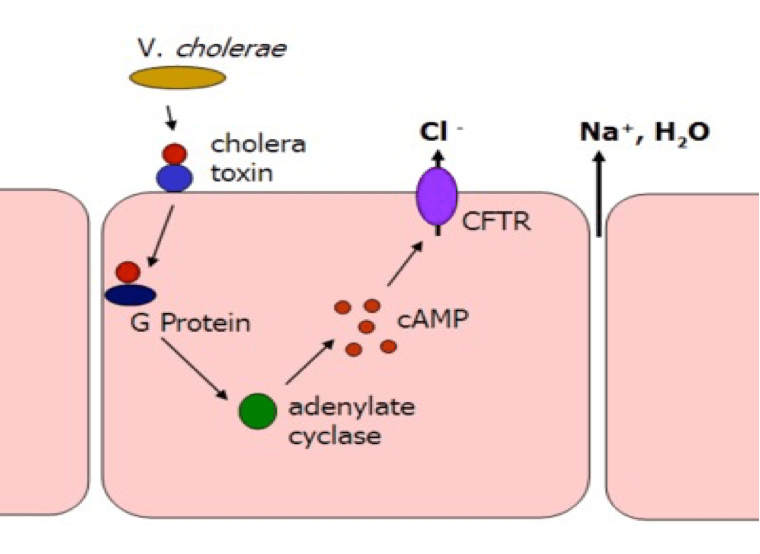
Once the bacteria establishes itself in the bowel, it must penetrate the mucous to reach the epithelial layer. Its long tail allows it to propel itself through this thick layer along while the bacteria also produces mucianlytic enzymes which destroy mucous integrity. Upon reaching the epithelial layer, the bacterium anchors itself onto microvilli by a mechanism yet to be understood. However, the so – called ‘coregulated pilli’ is suggested to be one of the key players. Furthermore, the way by which the bacterium induces excessive leakage of fluid from the cells is described in the following virulence mechanism. It secretes a protein polymer known as cholera toxin which binds to epithelial cells. Subunit B of this polymer binds to the glycolipids exposed on the outside of the host cell, bringing the bacterium and host cell in closer contact. The A subunit can then penetrate the host cell membrane whereby a cascade of intracellular molecular events takes place resulting in higher cAMP (Cycline adenosine monophosphate) levels (figure 1). This, for a reason yet to be understood, causes the secretion of chlorine, bicarbonate and water by the epithelial cells contacted by the toxin. The fluid accumulates to high levels and the body’s only option is to dispense it – mainly through the form of diarrhea. As high as 108 live Vibrio’s are found in 1 ml of diarrhea allowing it to effectively contaminate water that is then consumed by the host.

Figure 1: Schematic illustration of events that take place upon binding of cholera toxin to epithelial cells of the intestine. Source: http://www.sharinginhealth.ca/pathogens/bacteria/vibrio_cholerae.html, David La Pierre

Figure 1: Schematic illustration of events that take place upon binding of cholera toxin to epithelial cells of the intestine. Source: http://www.sharinginhealth.ca/pathogens/bacteria/vibrio_cholerae.html, David La Pierre

Figure 2: Steps required for V. cholerae to establish disease in the human host and transmit to others.

Figure 2: Steps required for V. cholerae to establish disease in the human host and transmit to others.

Treatment

Cholera is curable but because dehydration happens so quickly, it is essential to get antibiotics that kill the bacteria. Antibiotics are mainly used to decrease the diarrhea duration and reduce the bacteria excretion that help avoid the rapid disease spread by 50%. Although there is a vaccine against cholera, drinking water that has been boiled and chemically disinfected is the best way to avoid it.

Reference

Baron, S., & Finkelstein, R. A. (1996). Cholera, Vibrio cholerae O1 and O139, and Other Pathogenic Vibrio.

Collins, C. H., & Kennedy, D. A. (Eds.). (1983). Laboratory-acquired Infections (4th Ed.). Oxford: Butterworth-Heinermann

Harris JB, LaRocque RC, Qadri F, Ryan ET, Calderwood SB (2012) Cholera. Lancet 379: 2466–2476.

Orata FD, Keim PS, Boucher Y (2014). The 2010 Cholera Outbreak in Haiti: How Science Solved a Controversy

Ryan, K. J. and Ray, C. G. (Eds.). (2004.). Sherris Medical Microbiology: An Introduction to Infectious Disease. (Fourth Edition). New York. McGraw-Hill

Wong, C. K, Brown, A. M, Luscombe, G. M, Wong, S. J and Mendis, K. (2015). Antibiotic use for Vibrio infections: important insights from surveillance data.


Current Issues regarding methicillin resistant Staphylococcus Aureus

by Kevin Xue

Introduction:

When Alexander Fleming discovered penicillin in 1928, the modern world aspired to finally be rid of bacterial associated diseases. The effect of antibiotics had such a significant impact on public health that deaths by pathogenic bacteria declined significantly and a simple prescription of antibiotics would be an automatic and casual response. Unfortunately, this illusion was quickly shattered as bacterial infections started causing more illnesses and deaths again around the 1950s. Staphylococcus aureus (S. aureus), having acquired resistance to the beta-lactam class of antibiotics, is one of the most significant species of bacteria responsible for the re-emergence of bacterial disease. The beta-lactam class encompasses the family of drugs with the same mode of action as penicillin. Consequently, the concept of the “superbug” Methicillin-Resistant S. aureus (MRSA) has become widely feared.

History of MRSA:

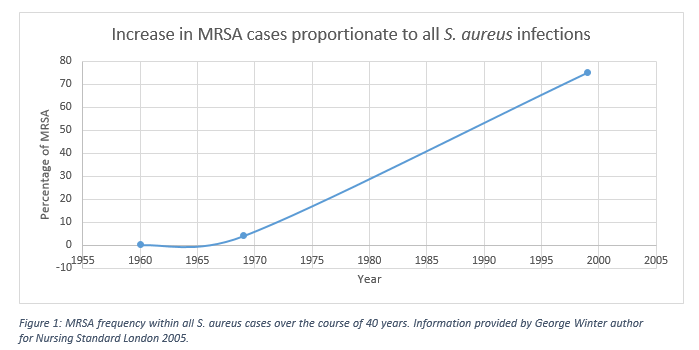
Resistance to penicillin dates as far back as 1942. Just about ten years later, roughly 70% of S. aureus isolates could deal with penicillin. With the increase of untreatable cases, a new derivative of beta-lactams referred to as methicillin was released for use in 1961. The optimism surrounding this new drug rapidly vanished as resistance was reported only a year after its implementation.  The frequency of resistance to the drug escalated quickly as strains that could survive methicillin escalated from 0.1% to 75% frequency in just 40 years (Figure 1). Though MRSA has been historically found in hospital settings, community acquired strains (CA-MRSA) have recently begun to emerge. Some of these strains such as the notable USA300 and USA500 account for most cases of community acquired strains.

Figure 1: MRSA frequency within all S. aureus cases over the course of 40 years. Adapted from George Winter, Nursing Standard London, 2005.

Figure 1: MRSA frequency within all S. aureus cases over the course of 40 years. Adapted from George Winter, Nursing Standard London, 2005.

The rise of antibiotic resistance:

In microbiology, any given population of bacteria will typically experience relative genetic diversity. Sometimes it takes just a small change in their genome for a bacterium to become resistant to antibiotics. Practically speaking, spontaneous resistance to antibiotics at an individual level happens very rarely in normal conditions. On the other hand, if resistant cells are selected for, then large scale resistance can occur as non-resistant strains perish and give way to their more adapted albeit it, fewer counterparts. Moreover, resistance to a drug can often depend on its dosage. If an infected person takes an antibiotic but does not consume the full treatment course, there may be a chance that mildly resistant bacteria survive treatment. The rise of resistance does not occur only in pathogens, normal bacterial populations that harmlessly inhabit animals can develop resistance also. Alternatively, non-infectious bacteria with antibiotic resistance can exchange DNA with pathogenic bacteria and confer resistance (Figure 2).

Figure 2: Acquisition of antibiotic resistance at cellular level.

Figure 2: Acquisition of antibiotic resistance at cellular level.

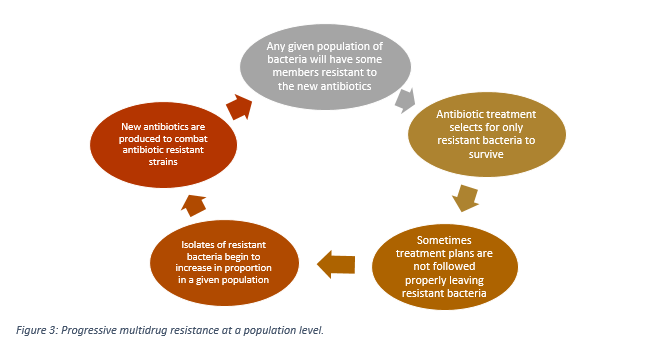
If antibiotic treatment is improperly prescribed to a patient in a singular case, the consequences are minimal provided that the patient follow the treatment properly. Contrarily, if antibiotics are prescribed to millions of people, the pool of resistant bacteria will keep expanding assuming a portion of the patients forego the rest of the treatment after clearance of symptoms and the partly resistant bacteria are allowed to grow again. Thus many factors can give rise to pools of antibiotic resistant bacteria. In practise, the overall rate of antibiotic strain diversity in MRSA is correlated with the overall antibiotic prescription policy and hospital regulation of a given region.  In essence, the liberal use of antibiotics and the poor adherence to treatment by patients have greatly accelerated resistance in bacteria (Figure 3).

Figure 3: Progressive multidrug resistance at a population level.

Figure 3: Progressive multidrug resistance at a population level.

Transmission and Pathogenicity:

The literature seems to agree that roughly 30% of people will have their nasal passages colonized with S. aureus. In England, estimates of about 1.5% of people carry MRSA.  Though formerly believed to be transmitted by skin to skin contact, it appears that fomites may act as a source of transmission also.  Fomites consists of objects and surfaces on which bacteria can survive or grow and can include anything from hospital beddings to cellphones.  Once colonized by MRSA, they become a risk factor for possible bacteremia or blood infection caused by a breach in skin. In less severe cases, skin infections can occur due to mucous membrane or skin breaching. Reports show nearly 80% of S. aureus infections are from the same strains found on the individual prior to actual infection, suggesting that asymptomatic colonization of MRSA is a risk factor.

Unfortunately, new strains of community acquired MRSA have been appearing frequently in the USA and can release a toxin called the Panton-Valentine Leukocidin (PVL) that targets host immune cells. These strains have been designated names such as USA300, USA400 and USA500. The PVL toxin allows MRSA to kill patients rapidly through necrotizing pneumonia (destruction of lung tissue) severe sepsis (causes whole body inflammation), and necrotizing fasciitis (skin-eating disease). CA-MRSA differ from hospital acquired strains as they tend to transmit through less traditional routes, such as via unprotected sex between men. As it stands, USA300 and similar strains appear to be especially dangerous due to new virulent traits that they have acquired.

Solutions:

Unfortunately, MRSA does not have many treatment options at the moment. When S. aureus first became methicillin resistant, the medical community started to realize that many of these bacteria were developing resistance to beta-lactams, which kills bacteria by preventing bacteria cell wall formation. As a result of beta-lactam resistance, research is being done on new modes of action for new antibiotics. Currently, vancomycin is being used as the main drug for MRSA. Unfortunately, vancomycin acts slowly and penetrates lung tissue poorly and thus MRSA related mortality still remains quite high. Additionally, vancomycin treatment selects for another dangerous pathogen resulting in vancomycin-resistant Enterococcus. As a species, S. aureus can be considered to be resistant to nearly all antibiotics. It is important to remember that antibiotics that have been rarely used are likely effective against most strains of MRSA as resistant ones would be selected for infrequently. As a result, many of the older and possibly more harmful antibiotics such as tetracycline and clindamycin are still effective. Moreover, by combining multiple antibiotics in a treatment, the probability of an MRSA strain resistant to all of the drugs plummets. Theoretically, MRSA can keep developing resistance until the point where one strain may be untreatable. Ultimately, vigilant and tight control on antibiotic treatment plans will help reduce selective pressure leading to fewer cases of strains surviving any single treatment.

Final considerations:

Though antibiotics can be viewed as a “god-sent” solution to the numerous pathogens that have ravaged the human population throughout history, it is important to keep in mind that life can adapt provided there is enough room to work with. MRSA represents a painful wakeup call. The poorly managed use of antibiotics has provided ample opportunity for this pathogen to rapidly become a superbug. In the future, caution and thought must be taken to insure that solutions to disease related problems do not create new problems.

References:

Banning, M. (2005). Transmission and epidemiology of MRSA: current perspectives. British Journal of Nursing 14:30 548-554.

Baddour, M.M. (2010) MRSA infections and treatment. Nova Science Publishers Inc., New York.

Bush, K. (2015) Synergistic MRSA combinations. Nature Chemical Biology 11, 832-833.

Byrne, F.M., Wilcox, M.H. (2011) MRSA prevention strategies and current guidelines. Injury Int. J. Care Injured 42, S3-S6.

Decker, C.F. (2008) Pathogenesis of MRSA infections. Disease-a-Month 54:12, 774-779.

Lubowitz, J.H., Poehling, G.G. (2008) Methicillin-Resistant Staphylococcus aureus. Arthroscopy : The Journal of Arthroscopic & Related Surgery 24:5, 497-499.

Tenover, F.C., Mcdougal, L.K.,  Goering, R.V., Killgore, G., Projan, S.J., Patel, J.B., Dunman, P.M. (2006) Characterization of a Strain of Community Associated Methicillin-Resistant Staphylococcus aureus Widely Disseminated in The United States. J. Clin. Microbiol 44:1, 108-118.

Winter, G. (2005) Origin of the Species The rise of antibiotic resistance and MRSA. Nursing Standard London 19:34: 24-25.


Chlamydophila psittaci

by Olivia Saray and Joshua Lee

Introduction

Chlamydophila psittaci is a species of bacteria that was first isolated from humans in Switzerland in 1879 and at this time named Pseudotyphus. The name Chlamydophila psittaci was adopted in 1890 by french scientist Morange, who isolated the same bacterium in parrots after deciphering it as a causative agent of psittacosis. C. psittaci caught the limelight in the early 1930’s when an epidemic broke out within domestic parrots and parakeets decreasing their popularity as household pets.

C. psittaci in addition to being a bacteria is also known as a zoonosis, causing infection primarily in animals but can also be contracted by humans; as a result inspection of exotic birds during importation is crucial to prevent future epidemics.

Disease

C. psittaci can be transmitted across species from bird to bird, bird to human, bird to reptiles, and bird to mammals. The bacterium is present in the tissues, feces, nasal and ocular discharge as well as plumage of infected birds. Contraction of the bacteria can occur through inhalation of particles from secretions of infected birds. It may also be transferred via physical contact of the bird’s beak with another animal or exposure due to injury, such as a bite from an infected bird. The most common method of transmission, however, is through the air.

C. psittaci presents less of a threat upon immediate release due to the fact that the organism remains viable while independent of a host. It exists as an elementary body outside of the host, meaning it can survive, but not infect, until it enters a new organism. Infected secretions eventually dry into a dusty substance, which contaminates the air. Inhalation of these particles could allow the bacterium to enter a potentially viable host and cause infection.

Once the bacterium presents itself in a new avian host, it will infect the mucosal epithelial cells of the bird and the macrophages of the respiratory tract. Macrophages, meaning “big eater”, are cells of the innate immune system that engulf pathogens. The bacterium will spread to infect other organs via the blood and result in localized infections such as pneumonitis, pericarditis, enteritis and sinusitis. If untreated the infection will eventually lead to septicemia and death of the bird.

Infection of a bird by C. psittaci will present observable symptoms in the host such as rough plumage, fever (resulting in puffiness of the bird’s feathers to keep warm), tremors, weight loss, yellow-green/greyish watery droppings, coughing and conjunctivitis.

Due to the adaptive nature of this bacterium, humans can also contract the disease and display symptoms following a 5 – 14 day incubation period. The severity of symptoms can vary from slight feelings of illness to systemic illness accompanied by severe pneumonia. More specific symptoms include fever, chills, headache, and myalgia. Humans usually contract this disease through inhalation of contaminated air or coming into direct contact with a bird, which is infected with the disease. Although the disease can be contracted through birds, transmission from human to human is rare. With modern medicine, deaths are limited to less than 1% of all reported cases, and are easily treated with antibiotics such as tetracycline.

Epidemiology

Cases of psittacosis have been reported in at least 159 different avian species. The most common victim being parrots, but transmissions have also been widely documented from free-ranging birds including doves, pigeons, and shore birds, among others.

Though there have been several outbreaks of psittacosis, the highest rate among household parrots was in 1983 with an astonishing rate of 24% of birds admitted to veterinary clinics testing positive for the disease. This percentage was probably much higher seeing as it is likely that many cases go unreported. Psittacosis is most common among small to medium sized parrots, where 17.8% of cockatiels, 27.3% lovebirds and conures, and 17.24% of African Greys and Amazon Parrots tested positive for the disease in the 1983 outbreak.

Today, these numbers remain relatively consistent, and cockatiels remain the most prevalent species to be infected with a rate of 24.8% positive diagnosis among examined cases.

Pet shops, breeders, and farming areas are at a higher risk of experiencing an outbreak due to the large number of birds kept in close proximity to one another.

Figure 2 - Photographs depict a healthy cockatiel (left) versus one infected with Chlamydophila psittaci (right). Photos taken by Olivia Saray.

Figure 2 – Photographs depict a healthy cockatiel (left) versus one infected with Chlamydophila psittaci (right).
Photos taken by Olivia Saray.

Virulence Systems

C. psittaci is a gram negative, coccoid shaped (round), intracellular bacterium, which begins infecting a host while it is still in the elementary body phase. Only in this phase can the bacterium be freely transferred from host to host. When particles containing C. psittaci are inhaled, the bacteria will begin by attacking the host’s respiratory tract. Cells of the immune system respond to the presence of the foreign bacteria and ingest the bacteria by engulfment (known as phagocytosis) to form a phagosome. However, unlike other pathogens, upon ingestion, the bacteria do not die. Phagosomes, which are compartments formed after the bacteria is engulfed, are responsible for bringing bacteria to lysosomes, an acidic compartment in the cell. The two organelles will fuse to form a phagolysosome, which is responsible for digestion and ultimately, the death of the bacterium. In the case of C. psittaci, however, the elementary body is not killed when the phagosome and lysosome fuse; rather it is transformed into a reticulate body. A reticulate body is a bacterium that is now able to replicate. After replication of the bacterium, C. psittaci will revert back to an elementary body and exit the host cell it has infected via lysis or bursting of the cell, resulting in host cell death. The elementary body will then continue its journey and repeat the infection and proliferation process in tissues throughout the entire body of the host.

Treatment

Infected birds should be kept in quarantine with proper ventilation to limit the amount of bacteria in the air. A heat lamp should be applied to maintain a cage temperature of 32℃. The environment should be kept as clean as possible. Birds should be weighed every 3-7 days to evaluate progression of the disease.

C. psittaci is highly susceptible to antibiotics such as tetracycline or its derivatives such as doxycycline or vibramycin. Tetracycline works by binding to the 30S ribosome of the bacteria, therefore inhibiting protein synthesis. This stops the proliferation of bacteria and allows the immune system to clear out the existing infection. Vibramycin is now the most commonly used antibiotic to treat psittacosis and is most effective when injected intravenously or intramuscularly (into the vein or muscle). Calcium supplements should be avoided during treatment, seeing as they bind to tetracycline and inhibit its antibacterial activity. If treatment is administered in the early stages of infection, psittacosis is rarely ever fatal.

References

Avian Biotech. (1995). Chlamydophila psittaci. Retrieved from         http://www.avianbiotech.com/diseases/Chlamydophila.htm

Centers for Disease Control and Prevention. (2010). MMWR weekly: Summary of notifiable diseases. Retrieved from http://www.cdc.gov/mmwr/preview/mmwrhtml/rr4908a1.htm

DC, Beeckman. ‘Zoonotic Chlamydophila Psittaci Infections From A Clinical Perspective. – Pubmed – NCBI’. Ncbi.nlm.nih.gov. N.p., 2015. Web. 16 Nov. 2015.

De Wailly, P., Prin, J., Prin, G. (Ed. 1). (2004). Atlas de lornithologie perruches & perroquets. (Vol. 1). United States: Animalia Editions.

Franson, C. J. (1989). Chlamydiosis. Field Manuel of Wildlife Diseases. 2(10), 111-114. Retrieved from                     http://wildpro.twycrosszoo.org/S/00Ref/bookref36_fieldmanualofwildlifediseases/10/chapter10.htm

Harkinezhad, T., Verminnen, K. (2009, May 12). Prevalence of Chlamydophila psittaci infections in a human population in contact with domestic and companion birds. Journal of Medical Microbiology. 58. 1207 – 1212. doi:10.1099/jmm. 0.011379-0

Martin, R.M. (1980). Cage & aviary birds. London, England: William Collins Sons & Co Ltd.

R, Mohan. ‘Epidemiologic And Laboratory Observations Of Chlamydophila Psittaci Infection In Pet Birds. – Pubmed – NCBI’. Ncbi.nlm.nih.gov. N.p., 2015. Web. 16 Nov. 2015.

State Government of Victoria. (2015, Feb 9). Psittacosis- Parrot Fever. Retrieved from http://www.betterhealth.vic.gov.au/bhcv2/bhcarticles.nsf/pages/Psittacosis_parrot_fever

Stoddard, Hannis L. ‘Understanding Psittacosis’. Multiscope.com. N.p., 2015. Web. 18 Nov. 2015.


Capnocytophaga canimorsus

by Samuelle De Villers-Lacasse and Mélissa Viel

Introduction

Capnocytophaga canimorsus is a bacteria that normally lives in the mouth of dogs and cats without causing symptoms. It retrieves N-acetylglucosamine, a compound it needs for its outer layer, from the components of the saliva of cats and dogs. In humans however, it turns into a pathogen: a microorganism capable of colonizing a host and causing a disease.

Disease

Capnocytophaga canimorsus can be transmitted though bites, licks and being close to animals in general. Symptoms of C. Canimorsus, infections usually appear within 1-8 days after exposure, in most cases around day 2. It feeds on the human host and stays undetected by the immune system. It does not get picked up by the specialized immune cells called macrophages and if by chance it does get picked up, the bacteria can also avoid getting digested by the macrophage. The symptoms after infection may resemble those of the flu but can be as bad as septicemia (blood poisoning). The most common symptoms are fever, vomiting, diarrhea, abdominal pain, confusion, headaches and muscle pain. In more severe cases it can lead to septic shocks, meningitis and peripheral gangrene.

Epidemiology

Cases of C. canimorsus infection have been observed worldwide. In 2005, the Canada Safety Council estimated that dogs bite 460,000 Canadians annually. Between 26-74% of dogs and 18-57% of cats carry C. canimorsus in their mouths. Usually an infection does not happen in healthy individuals but rather high risk ones. These are people with pre existing health conditions, namely alcoholics, people missing their spleen and individuals using steroids . Middle aged and elderly are also more vulnerable to infection. Handling dogs and cats on a regular basis is another risk factor.

Figure 1 Mode of transmission: the presence of dogs or cats with C. canimorsus living in their mouth would bite or lick someone. This would allow the bacteria to make its way into the human causing the symptoms mentioned previously.

Figure 1 Mode of transmission: the presence of dogs or cats with C. canimorsus living in their mouth would bite or lick someone. This would allow the bacteria to make its way into the human causing the symptoms mentioned previously.

Virulence

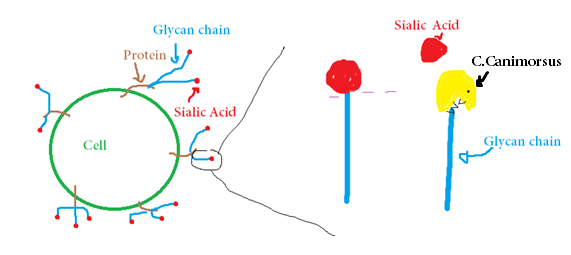
All human cells have a molecule called sialic acid on their surface to indicate they are from the human host and not from another organism. The sialic acid is on top of a structure of glycan chains (carbohydrates). C. canimorsus secretes an enzyme that cleaves sialic acid on the top and expose the glycan chains that it uses as food ;it can therefore feed on human cells.

Figure 2: C.canimorsus cleaves the sialic acid on the glycan chains to feed on them.

Figure 2: C.canimorsus cleaves the sialic acid on the glycan chains to feed on them.

Normally, macrophages, which are cells of the immune system whose role is to take in and digest unwanted material such as bacteria or cellular debris, would sense C. canimorsus and take it in and kill it by digesting it. .
The problem is, pathogenic strains of C. canimorsus evades the receptor on immune cells that should recognize it :TLR4. TLR4 normally binds to a lipid called lipid A that is a constituent of the outer layer of a group of bacteria called gram negative, because of how they stain under the microscope. C. canimorsus lipid A is different from other gram negative lipid A so won’t interact with TLR4. Non interaction with TLR4 therefore prevents the immune system to recognize that there is a pathogen. Not feeling the threat, TLR4 do not activate an inflammation/recruit immune cells to fight the pathogen, C. canimorsus therefore stays undisturbed.Because it doesn’t bind to TLR4, the microorganism also avoid getting sensed and engulfed by macrophages.
On top of that, the bacteria produces a soluble substance* that prevents the macrophages from killing anything it took in, therefore the bacteria stays in a sac inside the macrophage unharmed. Other bacteria can also benefit from C. canimorsus’ anti-killing protection even if they have been engulfed.

Treatment

The infections with this pathogen are rare but have a high mortality rate. Thankfully there is treatment available when caught early. Usually, after being bitten, the best course of action is to clean the wound. Antibiotics might need to be given if the wound is too deep or if there is a long delay before seeing a medical professional. The antibiotics given, such as penicillin or 3rd generation cephalosporins, usually contain a beta-lactamase inhibitor. Beta- lactamase is an enzyme that the bacteria use to defeat antibiotics. By administering an inhibitor, a molecule that stops the action of beta-lactamase, the bacteria therefore has no defense against those antibiotics.

Figure 3. Beta lactamase prevents antibiotics from working. Beta lactamase inhibitors allows antibiotics to work. * The specific molecule is still unknown.

Figure 3. Beta lactamase prevents antibiotics from working. Beta lactamase inhibitors allows antibiotics to work.

* The specific molecule is still unknown.
References:

1. Meyer, S., Shin, H., & Cornelis, G. (2008). Capnocytophaga canimorsus resists phagocytosis by macrophages and blocks the ability of macrophages to kill other bacteria. Immunobiology, 213(9-10), 805-814. doi:10.1016/j.imbio.2008.07.019

2. Renzi, F., Manfredi, P., Mally, M., Moes, S., Jenö, P., & Cornelis, G. (2011). The N-glycan Glycoprotein Deglycosylation Complex (Gpd) from Capnocytophaga canimorsus Deglycosylates Human IgG. PLoS Pathog PLoS Pathogens, 7(6). doi:10.1371/journal.ppat.1002118

3. Fischer LJ, Weyant RS, White EH and Quinn FD .(1995). Intracellular Multiplication and Toxic Destruction of Cultured Macrophages by Capnocytophaga canimorsus. Infection and Immunity 63 (9): 3484-3490.

4. Pers C, Gahrn-Hansen B, and Frederiksen W. (1996). Capnocytophaga canimorsus Septicemia in Denmark, 1982-1995: Review of 39 Cases. Clinical Infectious Diseases 23: 71-75.

5. Lion C, Escande F and Burdin JC. (1996). Capnocytophaga canimorsus Infections in Human: Review of the Literature and Cases Report. European Journal of Epidemiology 12 (5): 521-533.

6. Shin H, Mally M, Kuhn M, Paroz C and Cornelis GR. (2007). Escape from Immune Surveillance by Capnocytophaga canimorsus. The Journal of Infectious Diseases 195: 375-386.

7. Aggressive Dogs Threaten Public Safety. (2005). Retrieved November 22, 2015, from https://canadasafetycouncil.org/child-safety/aggressive-dogs-threaten-public-safety

8. Gaastra, W., & Lipman, L. (2010). Capnocytophaga canimorsus. Veterinary Microbiology, 140(3-4), 339-346. doi:10.1016/j.vetmic.2009.01.040

9. Mally, M., Shin, H., Paroz, C., Landmann, R., & Cornelis, G. (2008). Capnocytophaga canimorsus: A Human Pathogen Feeding at the Surface of Epithelial Cells and Phagocytes. PLoS Pathog PLoS Pathogens, 4(9). doi:10.1371/journal.ppat.1000164

10. Jolivet-Gougeon A, Sixou JL, Tamanai-Shacoori Z, Bonnaure-Mallet M. (2007). Antimicrobial treatment of Capnocytophaga infections. Int J Antimicrob Agents 2007;29:367–373.

11. Watson ID, Stewart MJ, Platt DJ (1988). “Clinical pharmacokinetics of enzyme inhibitors in antimicrobial chemotherapy”. Clin Pharmacokinet 15 (3): 133–64. doi:10.2165/00003088-198815030-00001. PMID 3052984.

12.Weese, S., & Anderson, M. (2013, August 1). Capnocytophage for pet owners. Retrieved November 22, 2015, from http://www.wormsandgermsblog.com/files/2008/04/M1-Capnocytophaga.pdf

Borrelia burgdorferi

by Hannah Zucherman

Introduction

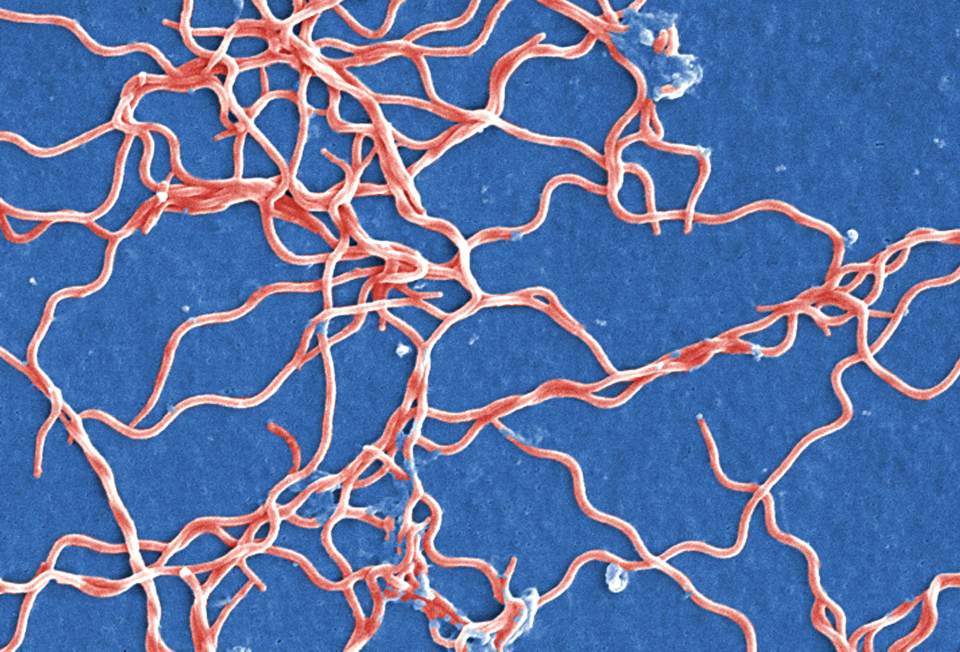
Lyme disease is caused by Borrelia burgdorferi, a member of the eubacterial phylum Spirochaetes. The bacterium possesses phenotypic characteristics of the genus Borrelia, appearing spiral or wavelike in appearance, with flagella (organs of motility) between the outer and inner membranes. Lyme disease was clinically identified as an infectious disease in 1977, and is the current leader of vector-borne diseases in the United States. Borrelia burgdorferi is a tick-borne obligate parasite whose normal reservoir is a variety of small mammals, in which it does not lead to disease, whereas in humans, Lyme disease results as a consequence of the human immunopathological response.

Figure 1. Visual representation of the Gram-negative, anaerobic bacterium, Borrelia burgdorferi. Carr, J. H., Molins, C. . (2015). Borrelia burgdorferi. Public Domain Images. Retrieved Sunday November 22, 2015, from http://www.public-domain-image.com/free-images/science/microscopy-images/borrelia-burgdorferi/grouping-of-gram-negative-anaerobic-borrelia-burgdorferi-bacteria/attachment/grouping-of-gram-negative-anaerobic-borrelia-burgdorferi-bacteria.

Figure 1. Visual representation of the Gram-negative, anaerobic bacterium, Borrelia burgdorferi.  Borrelia burgdorferi. Source: Carr, J. H., Molins, C. . (2015) http://www.public-domain-image.com/free-images/science/microscopy-images/borrelia-burgdorferi/grouping-of-gram-negative-anaerobic-borrelia-burgdorferi-bacteria/attachment/grouping-of-gram-negative-anaerobic-borrelia-burgdorferi-bacteria.

Disease

Lyme disease, caused by the spirochete Borrelia burgdorferi, is a common tick-borne infection transmitted by the bite of the tick species Ixodes scapularis, in eastern North America, and I. pacificus in western North America. Transmission to humans is mediated by the bite of an infected tick, and B.burgdoerferi will subsequently migrate through the bloodstream and many connective tissues. Manifestations of the disease are usually seen to affect the skin in the early stages, and later on may spread to the joints, nervous system, and heart. Infection rarely occurs during the first 24h of nymphal feeding but becomes increasingly likely after  attachment of the tick for 48h or longer. The most common clinical manifestation of Lyme disease is called erythema migrans, and is a result of early cutaneous infection with B. burgdorferi.

Epidemiology

Lyme Disease is the most commonly reported vector-borne illness in the United States, and was recognized as the 5th most common nationally notifiable disease in 2014. The occurrence of the disease is concentrated in areas of the northeast and upper Midwest, and is not found nationwide. In Connecticut, one of the most highly endemic areas of the United States, incidence rates are about 0.5 cases/1000, although it can be much higher in local areas. As well, incidence has been correlated to age, and findings suggest that incidence is nearly twice as high in children ages 5-10 years old, as compared to adults.

The risk of transmission is related to the factors involved in transmission of B. burgdorferi from ticks to humans. The proportion of infected ticks can vary depending on geographic area and life cycle stage. In low endemic areas, such as the Pacific states, few ticks are infected, as the serum in one of its major hosts kills B. burgdorferi. Another influential factor is the environment in which the bacteria live. B.burgdorferi reside in the mid-gut of the tick, which needs to become engorged with blood before the bacteria are able to migrate to the salivary glands, through which transmission into the host occurs. In endemic areas, the exposure to tick-infecsted fields, yards, or woodlands increases the risk of developing Lyme disease.

Virulence systems

The virulence properties acquired by B. burgdorferi are aimed more towards survival than they are at destruction of the host, and the ultimate virulence comes from the exploitation of the immune system ultimately leading to inflammation, the causation of Lyme disease.

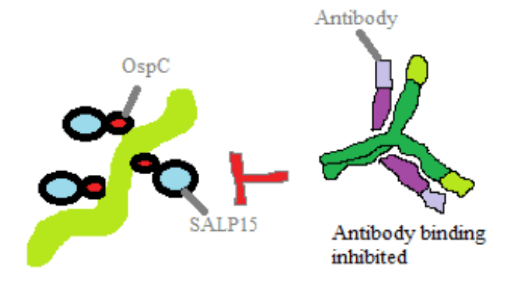
Expression of the bacterial protein OspC is used to promote penetration of the salivary glands by the spirochaetes disseminating within the tick, as well as the survival of those deposited at the bite site through binding to a different protein, SALP15. This mechanism is crucial for the establishment of early infection. Furthermore, SALP15 is able to enhance the survival of the bacteria inside the host by providing protection against antibodies, which are blood proteins that are able to combine with foreign substances in the blood resulting in neutralization of the harmful agent.It also uses a system of antigenic variation, in which the bacteria alters its surface proteins in order to avoid the host immune response. One such lipoprotein that undergoes antigenic variation through recombination is the VlsE lipoprotein, resulting in significant reduction in the effectiveness of the adaptive immune system.

Borrelial surface lipoproteins, referred to as BbCRASPs, bind to complement factor H and will also contribute to evasion of the immune system by protecting the bacterium against complement-mediated killing during early infection stages. Once the bacteria has established infection inside the host, initial sensing by host cells will occur through pattern recognition receptors, such as TLRs/NLRs on dendritic cells and macrophages within the dermis. Borrelial lipoproteins will moderate the engagement of TLR1-TLR2 heterodimers, downstream leading to release of inflammatory mediators and attracting inflammatory cells to the site of infection. B. burgdorferi is a highly motile organism, enabling it to evade the slower moving phagocytes resisting capture and degradation. Although, those that become phagocytosed and degraded will contribute to the immune response, infiltrating more inflammatory reactions ultimately leading to disease.

Figure 2. Illustration of the immune response ultimately leading to increased inflammation and subsequent disease.

Figure 2. Illustration of the immune response ultimately leading to increased inflammation and subsequent disease.

Figure 3. Protection against antibody binding and killing by SALP15 bound to OspC.

Figure 3. Protection against antibody binding and killing by SALP15 bound to OspC.

Treatment

In the early stages of infection, treatment with the appropriate antibiotics can lead to rapid and complete recovery in patients. Oral treatment antibiotics may include doxycycline, amoxicillin, or cefuroxime axetil. Amoxacillin, a type of penicillin, and cefuroxime, a cephalosporin, work by limiting the growth of the cell wall matrix resulting in eventual burst due to pressure and the weakened cell wall. Doxycycline, a type of tetracycline, blocks protein production, thereby limiting growth and leading to eventual cell death.

References

Tilly, K., Rosa, P. A., & Stewart, P. E. (2008). Biology of infection with Borrelia burgdorferi. Infect Dis Clin North Am, 22(2), 217-234, v. doi: 10.1016/j.idc.2007.12.013

Murray, T. S., & Shapiro, E. D. (2010). Lyme disease. Clin Lab Med, 30(1), 311-328. doi: 10.1016/j.cll.2010.01.003

Radolf, J. D., Caimano, M. J., Stevenson, B., & Hu, L. T. (2012). Of ticks, mice and men: understanding the dual-host lifestyle of Lyme disease spirochaetes. Nat Rev Microbiol, 10(2), 87-99. doi: 10.1038/nrmicro2714

Stewart, P. E., Wang, X., Bueschel, D. M., Clifton, D. R., Grimm, D., Tilly, K., . . . Rosa, P. A. (2006). Delineating the requirement for the Borrelia burgdorferi virulence factor OspC in the mammalian host. Infect Immun, 74(6), 3547-3553. doi: 10.1128/IAI.00158-06

Streptococcus suis

by Quoc Dat Bui, Karissa Tabtieng

Introduction:

Streptococcus suis (S. suis) is an emerging pathogen that predominantly infects pigs. The pathogen can lead to the development of several different diseases, such as meningitis and septicemia. The first reported incident of S. suis was with pigs suffering from septicemia in the early 1950s. This bacterium not only caused a large set back in the swine industry, but also began to directly harm human beings. Not long after the first reported case of S. suis in pigs were the first human S. suis cases. These cases of S. suis in both humans and pigs indicate that it is a zoonotic pathogen, a pathogen capable of transferring from animals to humans.

Disease:

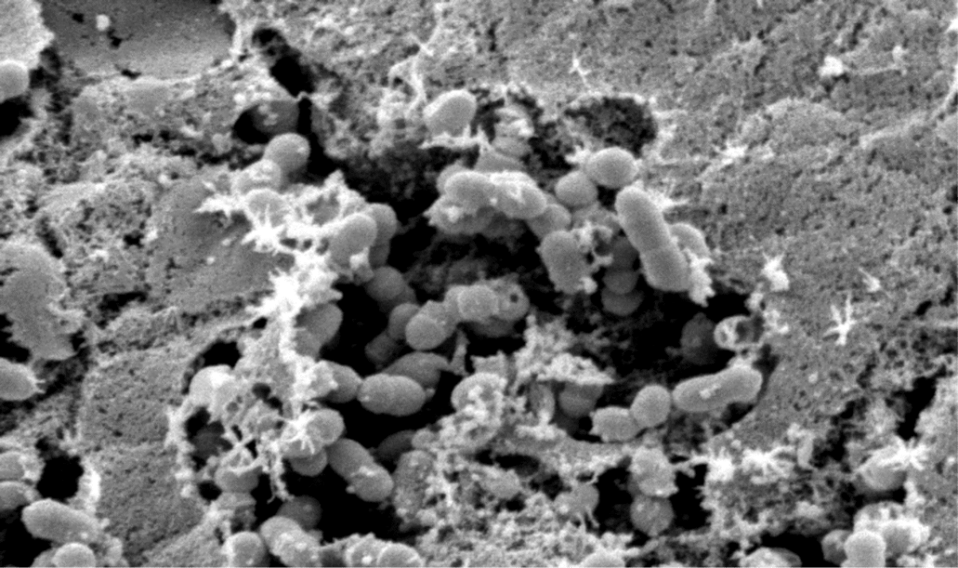
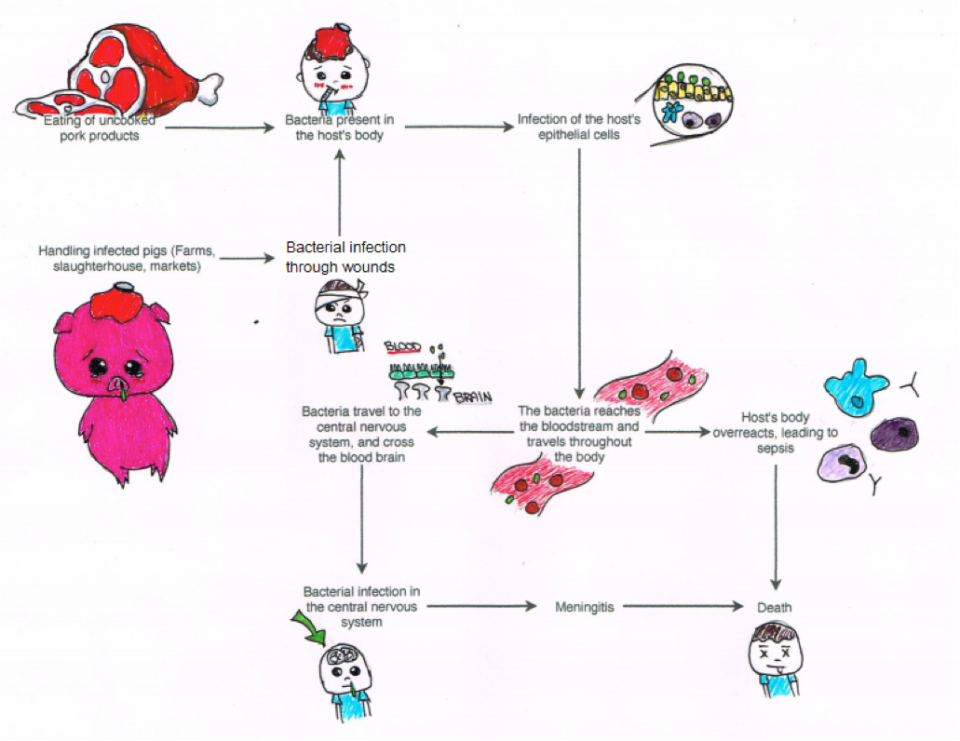
Humans can be infected with S. suis when they come into direct contact with infected pigs or contaminated raw pork. The pathogen’s ideal environment is the upper respiratory and intestinal tract of pigs (Figure 1). Infected pigs can be asymptomatic. As a result, S. suis can spread to humans unknowingly. The bacterium is most commonly transferred to humans due to wounds on the skin or mucosa that allow the pathogen entry into the body. First, the pathogen will encounter and infect epithelial cells. As the infection spreads to other tissues and potentially the bloodstream, the immune system will kick in and try to kill off the invaders. This can however lead to an overreacting immune system, causing a high amount of inflammation, systemic shock and potentially death.

Figure 1. Scanning Electron Microscopy of S. suis in a Sheet of Mucus on the Surface of the Nasopharyngeal Epithelium from a Pig. (Source: Department of Infectious Diseases, Dr. Shiranee Sriskandan (2006). Available from: http://journals.plos.org/plosmedicine/article?id=10.1371/journal.pmed.0030187)

Figure 1. Scanning Electron Microscopy of S. suis in a Sheet of Mucus on the Surface of the Nasopharyngeal Epithelium from a Pig. (Source: Department of Infectious Diseases, Dr. Shiranee Sriskandan (2006). Available from: http://journals.plos.org/plosmedicine/article?id=10.1371/journal.pmed.0030187)

Unfortunately, survivors at this point may then develop meningitis if the infection is left untreated. Meningitis is caused when the pathogen travels to the central nervous system. S. suis must pass the blood-brain barrier and infect the cells in this region in order to cause the disease. Symptoms that occur with the disease include headaches, fevers, vomiting, and hearing loss. Deafness and vestibular dysfunction are among the most common aftermaths in survivors. An illustration on the development of S. suis infection is shown in Figure 2.

Figure 2: Strategies of infection and damage caused by S. suis (Figure drawn by Karissa Tabtieng).

Figure 2: Strategies of infection and damage caused by S. suis (Figure drawn by Karissa Tabtieng).

Epidemiology:

More than 1,500 cases of S. suis infections were reported by the end 2012, with the highest intensity in Thailand, China, and Vietnam. However, these are only reported cases. The actual number of incidences would have been much higher, especially in the aforementioned areas where S. suis was common. Most of the patients were adults with an average age of 51.4 years. The majority of these adults were men (76.6%). The pooled fatality rate for infected patients was reported as 12.8%. Fatality was mostly associated with systemic infections, leading to hypotension, septic shock, multiorgan failure, and disseminated intravascular coagulation.

S. suis is not a notifiable disease in many countries, but in combination with the lack of awareness and treatment, many undiagnosed or misdiagnosed cases occur in these countries. Most incidents of S. suis infections were characterized as sporadic cases. However, in one contrary case, an outbreak in Sichuan Province, China in 2005, resulted in 215 cases and 38 deaths. This demonstrates the significance of S. suis as an emerging pathogen.

Virulence Factors:

Virulence factors are products that contribute to the bacterium’s ability to cause diseases. These factors vary among different S. suis serotypes, strains of the same species with slight differences. In addition, these virulence factors have yet to be thoroughly studied and understood; therefore the virulence factors of S. suis have not been conclusively established. However for serotype 2, the most common serotype to cause diseases in pigs and humans, there are a few potential subjects for virulence factors. There currently isn’t one virulence factor for all S. suis strains. Instead this bacterium throws many virulence factors at the host’s cells, which affects S. suis’ pathogenicity. This had made it difficult to study the relative importance of each virulence factor.

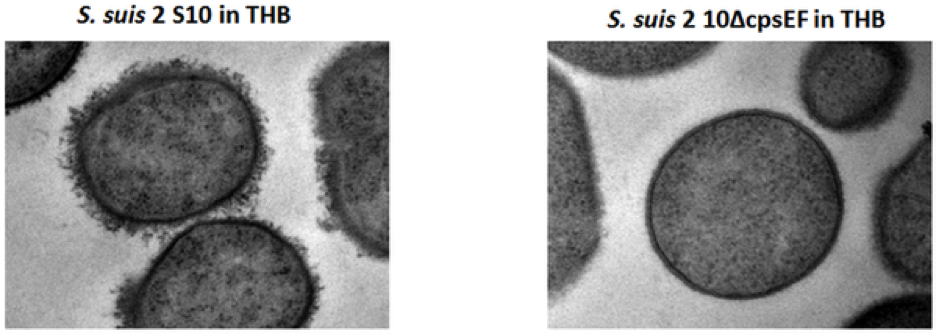
These virulence factors do not act alone. Several factors are required to cause pathogenesis. For instance, S. suis has a capsule, an outer shell made of polysaccharides (Figure 3). Its capsule is decorated with sialic-acid, which is also present in the host’s cells. Sialic-acid suppresses the activation of the host’s immune system through the deactivation of the complement system by the alternative pathway. This allows the pathogen to cloak from the host’s defenses, by masking itself as a host cell itself.

Figure 3. Detection of encapsulation of S. suis strains by LRR staining and transmission electron microscopy. S. suis 2 S 10 shows a thick capsule, whereas no capsular material can be seen in isogenic mutant strain S. suis 2 10ΔcpsEF. (Source: Host-Microbe Interactomics, Animal Sciences, Wageningen University, Marjolein Meijerink, Maria Laura Ferrando, Geraldine Lammers, Nico Taverne, Hilde E. Smith, Jerry M. Wells (2012). Available from: http://journals.plos.org/plosone/article?id=10.1371/journal.pone.0035849)

Figure 3. Detection of encapsulation of S. suis strains by LRR staining and transmission electron microscopy. S. suis 2 S 10 shows a thick capsule, whereas no capsular material can be seen in isogenic mutant strain S. suis 2 10ΔcpsEF. (Source: Host-Microbe Interactomics, Animal Sciences, Wageningen University, Marjolein Meijerink, Maria Laura Ferrando, Geraldine Lammers, Nico Taverne, Hilde E. Smith, Jerry M. Wells (2012). Available from: http://journals.plos.org/plosone/article?id=10.1371/journal.pone.0035849)

S. suis also has adhesins (such as enolase, Fbps), proteins that act as glue and allows them to attach to the host’s epithelial cells and form biofilms, a slimy substance that holds cells together. Adhesins are important to allow the pathogen to get close enough to invade host cells. Interestingly, the capsule hinders the capacity of adhesins for the attachment to host cells; therefore, S. suis needs to down-regulate its capsule to expose the adhesins to stick to host cells. S. suis also produces a toxin called suilysin, which can puncture and kill host cells, allowing S. suis to escape and disseminate. It can also cause damage to the host body because of its ability to trigger inflammation.

Treatment:

 S. suis is vulnerable to antibiotics such as penicillin, ceftriaxone and vancomycin. The principles of treatment are the same as treating other bacterial meningitis, using ceftriaxone with or without vancomycin. Intravenous treatment with penicillin G has been used successfully, even though one case of penicillin-resistance had been noted in humans. Early administration of antibiotics prior to meningitis is recommended in order to reduce the risk of hearing loss.

References:

Fittipaldi, N., Segura, M., Grenier, D., Gottschalk, M. 2012. Virulence factors involved in the pathogenesis of the infection caused by the swine pathogen and zoonotic agent Streptococcus suis. Future Microbiology, 7(2): 259-279.

Gottschalk, M., Xu, J., Calzas, C., and Segura, M. 2010. Streptococcus suis: a new emerging or an old neglected zoonotic pathogen? Future microbiology 5(3): 371-391.

Huong, V.T., Ha, N., Huy, N.T., Horby, P., Nghia, H.D., Thiem, V.D., Zhu, X., Hoa, N.T., Hien, T.T., Zamora, J., Schultsz, C., Wertheim, H.F., and Hirayama, K. 2014. Epidemiology, clinical manifestations, and outcomes of Streptococcus suis infection in humans. Emerging infectious diseases 20(7): 1105-1114.

Hughes, Wilson, Wertheim, Nghia, Taylor, and Schultsz. 2009. Streptococcus suis: An Emerging Human Pathogen. Clinical infectious diseases : an official publication of the Infectious Diseases Society of America. 48(5): 617.

Meijerink, M., Ferrando, M.L., Lammers, G., Taverne, N., Smith, H.E., Wells, J.M. 2012. Immunomodulatory Effects of Streptococcus suis Capsule Type on Human Dendritic Cell Responses, Phagocytosis, and Intracellular Survival.

Sriskandan S, Slater JD (2006) Invasive Disease and Toxic Shock due to Zoonotic Streptococcus suis: An Emerging Infection in the East? PLoS Med 3(5): e187.

Wang, Q., Lun, Z. 2008. Streptococcus suis: the Threat Remains. Emerging Infections, 8: 213-229.
Wertheim, H.F.L., Nghia, H.D.T., Taylor, W., Schultsz, C. 2009. Streptococcus suis: An Emerging Human Pathogen. Clinical Infectious Disease, 48(5): 617-625.

Mycobacterium tuberculosis

by Casey Leung and Veronika Saykova

Introduction

Mycobacterium tuberculosis is a pathogenic bacterium that causes tuberculosis, commonly known as TB. The bacteria were first identified in 1882 by German microbiologist Robert Koch. The emergence of M. tuberculosis as a human pathogen is not well understood, but tuberculosis became epidemic among humans in the seventeenth century, causing the Great White Plague in Europe. Humans are the only known reservoirs of M. tuberculosis.

Disease

Tuberculosis is an infectious disease caused by Mycobacterium Tuberculosis. The bacteria primarily infect the lungs, known as pulmonary tuberculosis (see Figure 1); but it can also spread to other parts of the body, known as extrapulmonary tuberculosis. Transmission from one person to another occurs when a person with pulmonary tuberculosis speaks, coughs or sneezes. The bacteria are expelled in micro droplets, which are suspended in air and then breathed in by a susceptible person. When inhaled, there are three distinct outcomes: 1) the inhaled bacteria are completely eradicated by the immune system so do not establish an infection, 2) the bacteria remain alive but inactive in the body, and 3) the active bacteria cause tuberculosis disease.

Figure 1: Chest x-ray of a person with pulmonary tuberculosis. Areas of the lungs (black) that are infected by M. tuberculosis appear as white haze (circled in red). Source: Public Health Image Library, Centers for Disease Control and Prevention (1972).

Figure 1: Chest x-ray of a person with pulmonary tuberculosis. Areas of the lungs (black) that are infected by M. tuberculosis appear as white haze (circled in red). Source: Public Health Image Library, Centers for Disease Control and Prevention (1972).

The inactive state is called latent tuberculosis infection and is the most common. In this state, the infected person is not sick and do not develop tuberculosis disease. Latent infection causes no symptoms and is not contagious. However, approximately 10% of people with latent infection eventually progress into active, which can occur immediately after infection up to decades later.

In the active state, the bacteria multiply in the body and cause contagious tuberculosis disease. Symptoms include persistent coughing, coughing up blood or mucus, chest pain, fatigue, weight loss, loss of appetite, fever and night sweats. If left untreated, it causes tissue damage in the lungs, resulting in respiratory failure and can spread to other parts of the body.

Epidemiology

Overall, mortality due to tuberculosis has declined by 47% since 1990. But it is estimated that about one-third of the world’s population has latent tuberculosis. Although only a minority of those infected develop active tuberculosis, it is still a major health problem each year and ranks alongside HIV as a leading infectious cause of death worldwide. Drug-resistant tuberculosis is also being an increasing concern. According to the latest World Health Organization annual report on tuberculosis, there was an estimate of 9.6 million cases and 1.5 million deaths in 2014 worldwide. However, the numbers vary significantly among different countries. In 2014, about 90% occurred in Africa and Asia while only 3% occurred in the Americas. The largest number of cases occurred in India, Indonesia, China, Nigeria, Pakistan and South Africa.

Figure 2: Estimated prevalence of tuberculosis per 100,000 people per country in 2007. Developing countries in Africa and Asia have the highest incident rates (shown in yellow), while countries in North America, parts of Europe, Australia and New Zealand have the lowest incident rates (shown in blue). Source: Wikimedia Commons, Eubulides (2009).

Figure 2: Estimated prevalence of tuberculosis per 100,000 people per country in 2007. Developing countries in Africa and Asia have the highest incident rates (shown in yellow), while countries in North America, parts of Europe, Australia and New Zealand have the lowest incident rates (shown in blue). Source: Wikimedia Commons, Eubulides (2009).

People in low-income developing countries are more likely to develop tuberculosis largely due to high rates of HIV infection and are less likely to be diagnosed or receive treatments. People with HIV are more susceptible to tuberculosis, with 12% of the 2014 cases being HIV-positive. In particular, Africa alone accounted for 74% of the total number of HIV-positive cases. Without proper treatment, the infected individuals are more likely to spread the disease to the larger community.

Virulence factors

In the latent state, M. tuberculosis remains alive but inactive due to the formation of granulomas, where the bacteria are surrounded by infected cells of the immune system. The bacteria are hidden and continue surviving in the centre then become active when the immune system is compromised and develop into tuberculosis disease.

By comparing the genetic sequences of the virulent Mycobacterium Tuberculosis and of the closely-related but non-virulent Mycobacterium bovis bacillus Calmette-Guérin (BCG) vaccine strain, a region of 9 genes called RD1 is discovered to contribute to the virulence of the bacteria. This region is responsible for the production of a protein called ESAT-6 that is secreted outside of the bacteria to recruit more immune cells to form the granulomas. If there is a disruption in the RD1 genes, the protein is either not produced or not secreted then the bacteria are no longer virulent. The bacteria will be unable to trigger the formation of granulomas or grow in lungs.

Treatments

Preliminary diagnostic for tuberculosis is commonly done using tuberculin skin test or blood test. If either tested positive, it identifies that the person has been exposured to tuberculosis bacteria, but further tests such as chest x-ray are needed to verify the state of infection: latent or active.

Current treatments for latent tuberculosis include a regimen of isoniazid over a 9-month period or a combination of isoniazid and rifapentine for 3 months. Standard treatment for active tuberculosis has a success rate of approximately 85%. It requires a 6-month long regimen of multiple first-line drugs: isoniazid, rifampicin, ethambutol and pyrazinamide for the first 2 months followed by an addition 4 months of isoniazid and rifampicin. In cases where the bacteria are resistant to the first-line drugs, second-line drugs are used for a much longer regimen of 20 months.

BCG vaccination can prevent tuberculosis disease in children and is widely used after birth in countries with high prevalence of tuberculosis. It is not widely used in countries such as Canada and the United States where tuberculosis is uncommon. The vaccine decreases the risk of getting an infection in children by about 20% and decreases the risk of an infection turning into disease by nearly 60%. However, the vaccine fails to protect against tuberculosis in adults, and an effective vaccine in adults still remains elusive to date. Currently, a number of new drugs and vaccines against tuberculosis are in development and are being tested in different stages of clinical trials.

References

Center for Disease Control and Prevention. (2012). CDC | Tuberculosis (TB) | Basic TB Facts. Retrieved 20 November 2015, from http://www.cdc.gov/tb/topic/basics/default.htm

Behr, M. A., & Sherman, D. R. (2007). Mycobacterial virulence and specialized secretion: same story, different ending. Nat Med, 13(3), 286-287. Retrieved from http://dx.doi.org/10.1038/nm0307-286

Phuah, J. Y., Mattila, J. T., Lin, P. L., & Flynn, J. L. (2012). Activated B Cells in the Granulomas of Nonhuman Primates Infected with Mycobacterium tuberculosis. The American Journal of Pathology, 181(2), 508-514. doi:http://dx.doi.org/10.1016/j.ajpath.2012.05.009

Talbot, E. A., & Raffa, B. J. (2015). Chapter 92 – Mycobacterium tuberculosis. In Y.-W. T. S. L. P. Schwartzman (Ed.), Molecular Medical Microbiology (Second Edition) (pp. 1637-1653). Boston: Academic Press.

World Health Organization. (2015). Global Tuberculosis Report 2015. Geneva. Retrieved from http://apps.who.int/iris/bitstream/10665/191102/1/9789241565059_eng.pdf?ua=1

Neisseria meningitidis

by Gabrielle Ménard and Gabrielle Rappaport

Introduction

Neisseria meningitidis, also referred to as meningococcus, is the causative agent of meningococcal diseases, such as meningitis. The first description of the disease was by Vieusseux in 1805, during an epidemic in Geneva, Switzerland. Later, in 1887, Weichselbaum provided the first identification of the Neisseria meningitidis bacterium, from the cerebrospinal fluid of a patient suffering from meningitis. The only natural reservoir for N. meningitidis is humans; there is no confirmed animal reservoir.

Disease

N. meningitidis is transmitted from person to person through respiratory droplets or direct secretions. Close contact with an infected person, such as living with them or exchanging fluids through kissing, puts one at high risk of infection. N. meningitidis first settles in the nasopharyngeal (nose and throat) cells of an individual, where it can colonize and multiply. In some cases, it will cross the mucosal layer and enter the bloodstream, evading the immune system by expressing specialized virulent structure. (Figure 1). Another severe case is when N. meningitidis crosses the blood-brain barrier (a structure separating the circulating blood from the brain and spinal cord) and enters the cerebrospinal (brain and spinal) fluid.

Figure 1: Schematic representation of the passage of Neisseria meningitidis through the epithelial layer. Source: “Surface adhesion and host response as pathogenicity factors of Neisseria meningitidis” by Jose Uberos, et al. (2015), World Journal of Clinical Infectious Diseases 5(2): 37-43.

Figure 1: Schematic representation of the passage of Neisseria meningitidis through the epithelial layer. Source: “Surface adhesion and host response as pathogenicity factors of Neisseria meningitidis” by Jose Uberos, et al. (2015), World Journal of Clinical Infectious Diseases 5(2): 37-43.

Furthermore, there are both pathogenic and non-pathogenic serotypes of N. meningitidis. Serotypes are subdivisions of a species that contain bacteria that are closely related and distinguishable by their surface proteins. Pathogenic serotypes can cause meningococcal meningitis, when N. meningitidis crosses the BBB to the meninges, causing headaches and fever, sensitivity to light, muscular rigidity, confusion, and possibly death. If the bacterium is in the blood, meningococcal septicemia can occur, which can lead to purpura fulminans, a non-blanching purple-blue rash. This form of disease can also induce septic shock, consisting of low blood pressure, organ failure and potentially death.

Epidemiology

Meningococcal disease has been found to vary around the world from very rare (0.5 cases per 100 000 a year in North America, <1/100 000 in Europe) to around 1000 cases per 100 000 population a year (in Africa). People living in the African “meningitis belt”, ranging from Ethiopia to Senegal, are at highest risk of contracting the disease. In this specific area, outbreaks occur every 5-10 years. N. meningitidis carriage happens in 8-25% of the human population, a major portion of which are young children, adolescents and young adults. Carriage can be and is usually asymptomatic, not causing infection in the carrier. Before proper treatment was available, the mortality rate of systemic meningococcal disease was 70-90%. Currently, it is reduced a lot in comparison, but is still considered to be high, at 10-15%. In the largest meningococcal epidemic outbreak recorded in 1996-1997 in Africa, 300,000 cases of serotype A infection resulted in 30,000 deaths.

Virulence systems:

Neisseria meningitidis is an extracellular pathogen, meaning that it colonizes and proliferates in the extracellular fluid and blood. To escape the body’s defences, the major asset of N. meningitidis is the biosynthesis of a capsule made of sialic acid that covers the bacteria and protects it from the host’s immune system. Following its entry in the host, the capsule will prevent the antimicrobial peptides (AMPs) present in the mucus layers of the throat from degrading and killing the invading bacteria. The capsule will also hide the bacteria from professional eating cells of the immune system called phagocytes. They will not be able to recognize it as a foreign invader, and therefore it will not be eaten and degraded by phagocytosis. Finally, encapsulated bacteria are further protected because the polysaccharide coating has low affinity for complement proteins. The complement system is formed by the association and binding of several host proteins on the surface of extracellular bacterial pathogens, leading to the formation of the MAC complex which perforates the surface of the bacteria and kills it.

Neisseria meningitidis will reach the blood stream where it will proliferate, still protected by its capsule. To be able to cross the blood brain barrier, a structure called the Tfp pili (type IV pili) must be expressed. Pili are rope-like projections on the surface of bacteria made of several assembled subunits called pilin. (Figure 2) They allow bacteria to adhere to host cells through adhesion molecules present at their tip. In this case, it is responsible for adhesion to endothelial cells of the brain, which triggers an intracellular signalling pathway in the host cells. This signalling leads to the disruption of the junctions between the hosts cells, allowing Neisseria meningitidis to cross the endothelial layer and reach the cells of the central nervous system and the meninges. The retraction of the pili also provides motility to the bacteria, allowing it to move across surfaces.

Figure 2: Computer generated image of Neisseria gonorrhoeae and its numerous type IV pili (tfp). The pili expressed by N. gonorrheae are identical to those expressed by N. meningitidis. Source: Public Health Image Library, Center for Disease Control and Prevention, James Archer (2013).

Figure 2: Computer generated image of Neisseria gonorrhoeae and its numerous type IV pili (tfp). The pili expressed by N. gonorrheae are identical to those expressed by N. meningitidis. Source: Public Health Image Library, Center for Disease Control and Prevention, James Archer (2013).

Treatment:

Antibiotic treatment must be started as soon as a Neisseria meningitidis infection is suspected, as the damage it causes can be very severe and irreversible. A sample of blood or cerebrospinal fluid is also usually taken and analysed to confirm the diagnosis. A variety of different antibiotics can be effective against N. meningitidis, penicillin being the most widely used. It fights the infection by disrupting the bacterial cell wall and creating small holes in it. The cell’s content will then leak out, which causes its death. Some strains are now becoming resistant to penicillin, so ceftriaxone is also used. However, even with antibiotic treatment, patients can be left with severe disabilities like lost limbs or brain damage. Vaccination is therefore the most effective way to prevent such consequences.

References:

Center for Disease Control and Prevention. (2015). Meningococcal disease. Retrieved from: http://www.cdc.gov/meningococcal/about/diagnosis-treatment.html

Coureuil, M., Join-Lambert, O., Lécuyer, H., Bourdoulous, S., Marullo, S., & Nassif, X. (2012). Mechanism of meningeal invasion by Neisseria meningitidis. Virulence, 3(2), 164–172.

Eriksson, J., Eriksson, O.S., Maudsdotter, L., Palm, O. et al. (2015) Characterization of motility and pilation in pathogenic Neisseria. BMC Microbiology 15, 92.

Halperin, S. A., Bettinger, J. A., Greenwood, B., Harrison, L. H., Jelfs, J., et al. (2012). The changing and dynamic epidemiology of meningococcal disease. Vaccine, 30, 26-36.

Marri, PR. Paniscus, M., Weyand, NJ., Rendón, MA., Calton, CM., et al. (2010) Genome Sequencing Reveals Widespread Virulence Gene Exchange among Human Neisseria Species. PLoS ONE 5(7).

Rouphael, N. G., & Stephens, D. S. (2012). Neisseria meningitidis: Biology, Microbiology, and Epidemiology. Methods in Molecular Biology (Clifton, N.J.), 799, 1–20.

Stephens, D. S., Greenwood, B., & Brandtzaeg, P. (2007). Epidemic meningitis, meningococcaemia, and Neisseria meningitidis. The Lancet, 369, 9580, 2196-2210.


Chlamydia trachomatis

by Erica Grier and Mariepièr Glaude

Introduction

Chlamydia trachomatis is a bacterium that infects the columnar epithelial cells of the urethra, cervix and rectum. It also occasionally infects other parts of the human body such as the lungs and eyes, though this is less common. C. trachomatis is gram negative, non-motile and an obligate intracellular pathogen. Infection by C. trachomatis is the most frequently reported STI in Canada and the United States.

Disease

C. trachomatis is spread through vaginal, anal and oral sex. Pregnant women infected with chlamydia can also infect their child while giving birth. Once C. trachomatis gets inside the human host, immune cells will attempt to fight off the pathogen. However, C. trachomatis is able to avoid being killed by immune cells by living and replicating inside of them (Figure 1). Infection by C. trachomatis can cause pain during sex, pain during urination, unusual or bloody vaginal discharge, and sometimes even nausea and mild fevers. However, infection by C. trachomatis can also be completely asymptomatic. Asymptomatic carriers are an important reservoir for the bacteria as people who are unaware they are infected can easily spread the infection to their partners.

Figure 1: Human pap smear showing cells infected with Chlamydia trachomatis at 500x magnification, stained with haematoxylin and eosin (Photo source: PLOS Pathogens).

Figure 1: Human pap smear showing cells infected with Chlamydia trachomatis at 500x magnification, stained with haematoxylin and eosin (Source: PLOS Pathogens).

Epidemiology

C. trachomatis is found worldwide and is considered endemic to over 50 different countries. Although many C. trachomatis infections occur annually in North America, infections are most common in Africa, the Middle East, India and Southeast Asia.

The most influential factors of infection are sex and age, but race can also play a role in risk of infection. It has been shown that women are more likely to develop chlamydia infections than men. Additionally, the Centre for Disease and Control has recently reported enormous increases in infection rates for both men and women, 37.6% and 29.3% respectively. In a group of 100 000 females ranging from 15 to 19 years old, it is likely that around 2800 of them will be infected by C. trachomatis. For men, the most infected age group is usually older, ranging from 20 to 25 years old. Men who have sex with other men are also at greater risk of contracting C. trachomatis infections. When analyzing risk of infection in terms of race, the rate of C. trachomatis infection is approximately 8 times greater among African American populations than it is among Caucasian populations.

Virulence Factors

For a chlamydia infection to be established, the intracellular pathogen must bind to and be taken in by the host cell. Binding and entry into the host is largely mediated by the polymorphic membrane D (PmpD). This protein acts as an adhesion molecule, allowing the bacteria to bind to and be ingested by the immune cell. Normally, these immune cells kill the pathogen with degradative enzymes upon fusion of the phagosome and lysosome. However, this is not the case when an immune cell is infected with C. trachomatis. C. trachomatis is only able to establish an infection because it is capable of preventing killing by the immune cell.

In order to survive inside the host, C. trachomatis is endocytosed by the immune cell as an elementary body. This body is the explanation behind the intracellular survival of the bacteria. It inhibits fusion of the phagosome to the lysosome, allowing the pathogen to continue its life cycle (Figure 2). The elementary bodies, considered the inactive form of chlamydia, then develop into reticulate bodies. About 20 hours after initial infection, these reticulate bodies divide and differentiate back into elementary bodies that are released and can now induce new rounds of infection.

Figure 2: Elementary bodies inhibit the fusion of the lysosome to the phagosome, preventing the completion of phagocytosis and therefore the degradation of C. trachomatis (Source: Mariepièr Glaude).

Figure 2: Elementary bodies inhibit the fusion of the lysosome to the phagosome, preventing the completion of phagocytosis and therefore the degradation of C. trachomatis (Source: Mariepièr Glaude).

Another factor that contributes to virulence is the concept of antigenic variation. Currently, there are 15 known serotypes related to C. trachomatis infections. Antibodies produced for one serotype will have no effect on another serotype, allowing C. trachomatis to remain harmful to host cells. Studies have shown that the lipopolysaccharides (LPS) found in the cell wall of C. trachomatis also play a role in the bacteria’s infectivity. This is because LPS is important in the binding of the bacteria to cells of the genital and respiratory tracts.

Treatment

Chlamydia trachomatis infections can be treated with antibiotics. Azithromycin, erythromycin and doxycycline are commonly used and very effective. These antibiotics clear infections by preventing bacteria from producing proteins essential to survival. Other antibiotics such as amoxicillin are used in place of doxycycline to treat chlamydia in pregnant women because doxycycline can cause harm to a developing child. Patients with chlamydia should abstain from sexual intercourse for seven days after starting antibiotics to avoid infecting their partners. If both partners have C. trachomatis infections they should be treated at the same time to prevent reinfection.

References

Centers for Disease Control and Prevention STD Surveillance [Internet]. 2009. San Francisco (CA): CDC; [updated 2010 Nov 22, cited 2015 Nov 20]. Available from: http://www.cdc.gov/std/stats09/

Darville C. 2015. Chlamydia trachomatis – Urgent need for an effective T cell vaccine to combat the silent epidemic of a stealth bacterial pathogen. PLOS Pathogens [Internet]. [updated 2010 Feb 25, cited 2015 Nov 20]. Available from: http://blogs.plos.org/speakingofmedicine/2015/02/25/ chlamydia-trachomatis-urgent-need-effective-t-cell-vaccine-combat-silent-epidemic-stealth-bacterial-pathogen/

Fadel S, Eley A. 2008. Is lipopolysaccharide a factor in infectivity of chlamydia trachomatis? Journal of Medical Microbiology. 57: 261-266.

Hafner L, Beagley B, Timms P. 2008. Chlamydia trachomatis infection: host immune responses and potential vaccines. Mucosal Immunology. 1(2):116-130.

Miller KE. 2006. Diagnosis and Treatment of Chlamydia trachomatis Infection. American Family Physician. 73(8): 1411-1416.

Mishori R, McClaskey E, Winklerprins J. 2012. Chlamydia Trachomatis Infections: Screening, Diagnosis, and Management. American Family Physician. 86(12): 1127-1132.

Peeling R, Mabey D, Herring A, Hook E. 2006. Why do we need quality-assured diagnostic tests for sexually transmitted infections? Nature Reviews Microbiology. 4: 909-921.

Stamm WE. 1999. Chlamydia trachomatis Infections: Progress and Problems. 179(2): 80-83.

Taylor B, Darville T, Tan C, Bavoil P, Ness R, Haggerty C. 2011. The Role of Chlamydia trachomatis Polymorphic Membrane Proteins in Inflammation and Sequelae among Women with Pelvic Inflammatory Disease. Infectious Diseases in Obstetrics and Genycology. Doi: 10.1155/2011/989762.